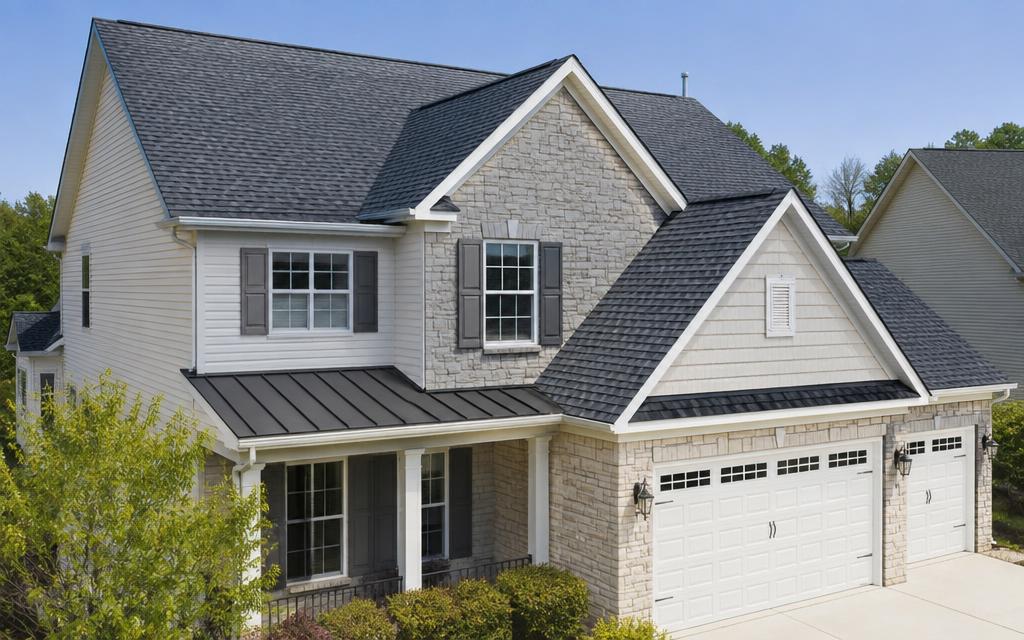
About residential roofing in Denver
Residential roofing covers the installation, repair, and upkeep of roofs on houses and small residential buildings. Materials, slope, ventilation, and local weather all shape which approach fits a given home, so most projects begin with an on-site assessment by a contractor.
Properties in Denver and Denver County can differ in age, roof shape, materials, exposure, and local requirements. An on-site assessment is the reliable way to determine the right scope for a specific property.
Residential Roofing in Denver should account for the roof’s current condition, its material and slope, and the weather exposures common across Colorado. For a larger project, compare written scopes that identify the roof assembly, ventilation or insulation work, flashing details, disposal, permits, and final inspection responsibilities.
Local weather and roof performance
Mountain West roofs can face high ultraviolet exposure, rapid temperature changes, snow, ice, hail, and strong winds. Elevation and local terrain can make conditions vary significantly within the same state.
- Look for hail bruising, wind-lifted materials, and failed sealant around penetrations.
- Review snow-shedding, ice-barrier, ventilation, and structural considerations where winter accumulation occurs.
- Choose materials and attachment methods suited to local wind, sun, and temperature swings.
Ask the contractor to base material and structural recommendations on the property’s elevation, exposure, and locally adopted snow and wind requirements.
What this work generally involves
- Evaluating the existing roof structure, decking, and covering
- Recommending materials suited to the home's pitch and climate
- Removing old roofing and preparing the deck when needed
- Installing underlayment, flashing, and the finished roof covering
- Final inspection of seams, penetrations, and drainage
Local project considerations
- Material lifespan varies widely — asphalt, metal, tile, and wood each age differently.
- Local building codes and HOA rules may limit material or color choices.
- Ventilation and insulation affect how long a roof system lasts.
- Ask any contractor you consider about licensing and insurance before work begins.
- Ask the contractor about permits and requirements that apply in Denver.
Common questions
How do I know if my home needs roofing work?+
Common signs include missing or curling shingles, granules in gutters, water stains on ceilings, and daylight visible in the attic. A professional inspection is the reliable way to confirm the roof's condition.
How long does a residential roof typically last?+
It depends on the material and climate. Asphalt shingles often last 20–30 years, while metal and tile can last longer. A local contractor can assess your specific roof.
Does this website perform residential roofing work?+
No. This site connects visitors with independent local roofing contractors. All work is performed by the contractor you choose to hire.