About this service
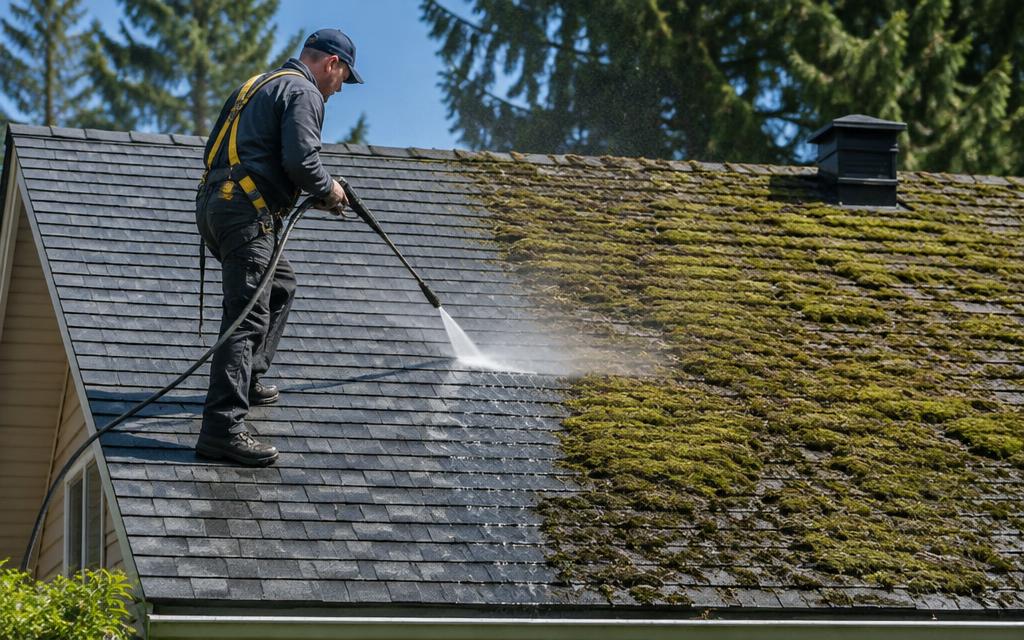
Dark streaks (algae), moss, and lichen hold moisture against roofing and can shorten its life. Professional cleaning uses methods matched to the material — typically soft washing rather than high pressure, which can damage shingles.
A qualified contractor should evaluate the complete roof assembly before recommending work. The visible symptom may begin at flashing, drainage, ventilation, fasteners, or materials several feet from where moisture appears indoors.
What it generally involves
- Identifying growth type and roof material
- Applying appropriate cleaning solutions (soft-wash methods)
- Gently removing moss and debris without lifting shingles
- Clearing gutters and rinsing surrounding landscaping safely
Things to consider
- High-pressure washing can strip shingle granules — ask about the method used.
- Zinc or copper strips can slow regrowth in damp climates.
- Overhanging branches accelerate moss growth; trimming helps.
- Ask the contractor about permits and code requirements that apply in your city and county.
What to ask before work starts
- • What condition is causing the problem, and how was it confirmed?
- • Which materials, preparation steps, and disposal costs are included?
- • What workmanship coverage applies to this specific type of roofing work?
- • Are permits, weather protection, cleanup, and final inspection included?
Common questions
Is roof cleaning safe for shingles?
Yes when done with soft-wash methods. Pressure washing is generally not recommended for asphalt shingles.
How often should a roof be cleaned?
It depends on shade, trees, and climate — some roofs need it every few years, others rarely. A contractor can advise based on your roof.
Does this website provide cleaning services?
No. Cleaning is performed by independent contractors available through our service.