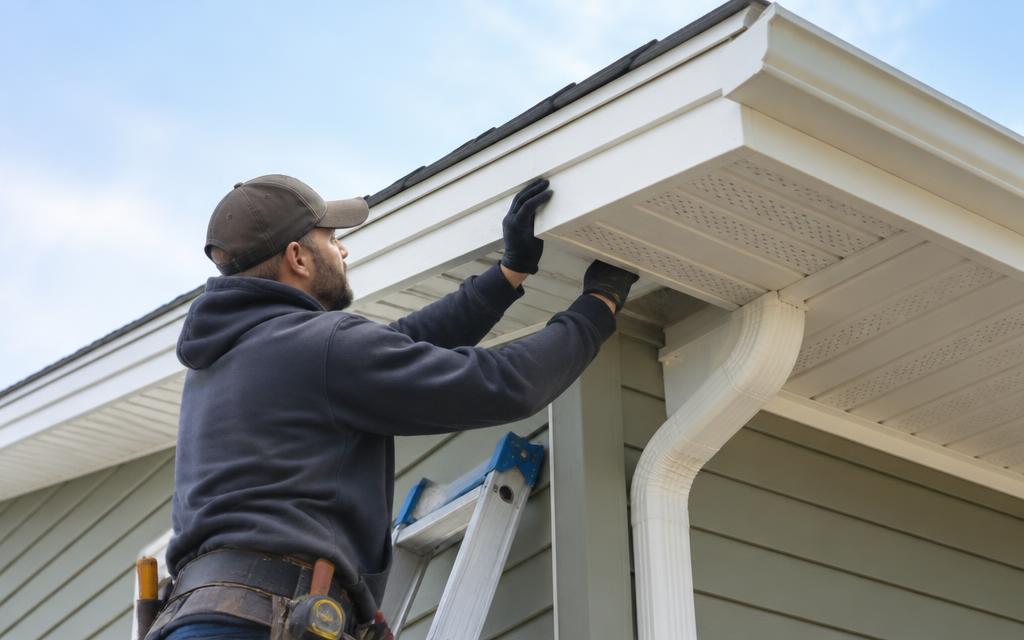
About this service
Soffit and fascia close off the underside and edge of the roof overhang. Beyond appearance, they keep pests out of the attic, support gutters, and — with vented soffit — provide intake airflow for the ventilation system.
A qualified contractor should evaluate the complete roof assembly before recommending work. The visible symptom may begin at flashing, drainage, ventilation, fasteners, or materials several feet from where moisture appears indoors.
What it generally involves
- Removing deteriorated wood and inspecting rafter tails
- Installing fascia boards and drip edge
- Fitting vented or solid soffit panels
- Coordinating with gutter installation and ventilation needs
Things to consider
- Rot in soffit or fascia often signals a gutter or flashing problem upstream.
- Aluminum and vinyl options reduce future painting and rot risk.
- Vented soffit area should match the attic's ventilation plan.
- Ask the contractor about permits and code requirements that apply in your city and county.
What to ask before work starts
- • What condition is causing the problem, and how was it confirmed?
- • Which materials, preparation steps, and disposal costs are included?
- • What workmanship coverage applies to this specific type of roofing work?
- • Are permits, weather protection, cleanup, and final inspection included?
Common questions
How do I know if soffit or fascia needs replacement?
Peeling paint, soft or crumbling wood, pest activity, and sagging gutters are common indicators. A contractor can confirm the extent.
Can soffit be replaced without replacing the roof?
Yes, soffit and fascia work is commonly done independently of re-roofing, though combining projects can be efficient.
Does this site perform soffit and fascia work?
No. Work is performed by independent contractors you connect with through our service.