Learn how attic ventilation works, the main types of roof vents, warning signs of poor airflow, and practical ways to improve ventilation in your home.
Your attic needs to breathe. Balanced ventilation helps move moisture and heat out of the attic, which can protect roof framing, insulation and shingles.
This guide explains how attic airflow works, the common vent types, the warning signs of a problem and what you can do to improve it.
How attic ventilation works
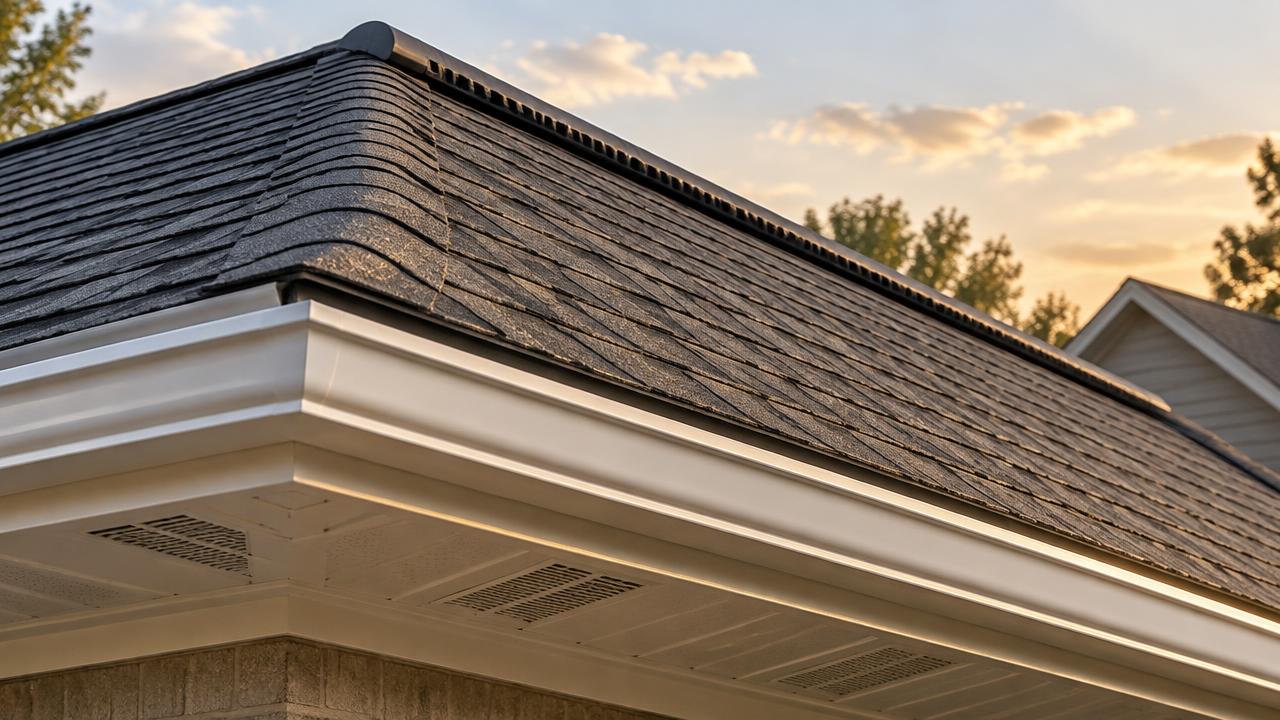
Cooler outside air enters through intake vents near the eaves, flows up under the roof deck, and leaves through exhaust vents at or near the ridge. This steady movement helps carry away warm, moist air from the attic.
Many building codes set a minimum amount of net free vent area based on attic floor size, split between intake and exhaust. Requirements vary, so local code should always be checked.
Common types of roof vents
- Soffit vents — intake vents under the eaves
- Ridge vents — continuous exhaust along the roof peak
- Static or box vents — individual exhaust vents near the ridge
- Gable vents — vents in the gable end walls
- Turbine and powered attic vents — mechanical or wind-driven exhaust
- Rooftop intake vents — used where soffits are limited
Related service:Roof ventilation solutions →Soffit and fascia installation →
Signs of poor attic ventilation
- Damp or compressed insulation, or frost on the underside of the roof deck in winter
- Mold, mildew or a musty smell in the attic
- Ice dams forming along the eaves
- Very hot upstairs rooms in summer
- Peeling paint, warped soffits or rotting fascia boards
- Premature shingle wear, curling or blistering
Related service:Roof inspection →
Common ventilation problems
- Insulation pushed against soffit vents, blocking intake air
- Too much exhaust and not enough intake
- Mixing different exhaust types on the same roof, which can short-circuit airflow
- Bathroom or kitchen fans venting into the attic instead of outdoors
- Air leaks from the living space carrying moisture into the attic
Related service:Insulation services →
How to improve attic airflow
Many improvements are straightforward once a contractor confirms what is wrong:
- Clear or add soffit intake vents and install baffles so insulation doesn't block them
- Add or upgrade a continuous ridge vent, often during a re-roof
- Remove or close conflicting exhaust vents
- Route bath and kitchen fans to the exterior
- Air-seal attic openings such as light fixtures, pipes and the attic hatch
Related service:Roof replacement →Roof repair →
When to call a roofing professional
If you notice moisture, mold or repeated ice dams, have the attic and roof inspected. A contractor can measure your attic, check local code requirements and recommend a balanced vent layout. Avoid cutting new vents yourself — poorly placed openings can cause leaks.
Related service:Roofing consultation services →
Frequently asked questions
Sources and further reading
This article is general information, not professional advice. Conditions, codes and requirements vary by location — always confirm details with a licensed, insured contractor in your area.