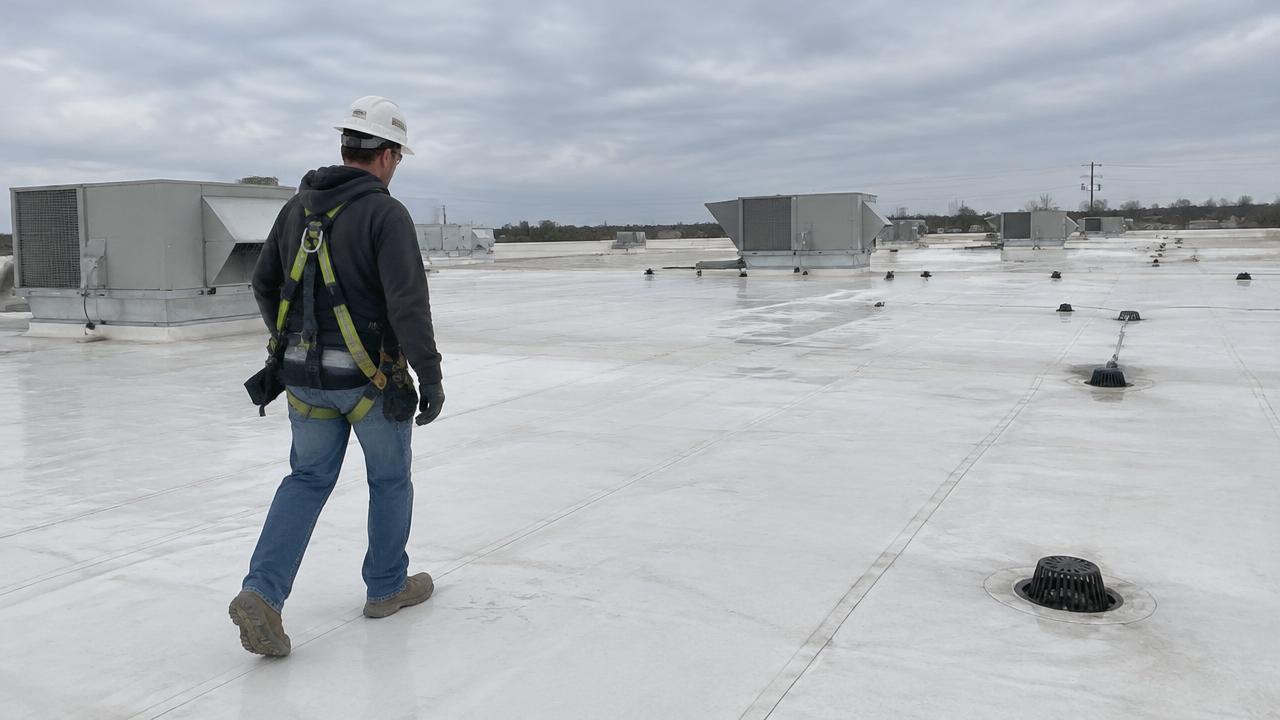
Learn the warning signs of commercial roof damage, the main repair options for low-slope roof systems, and what to expect from inspection, quote and repair work.
Commercial buildings usually have low-slope roof systems — single-ply membranes such as TPO, PVC or EPDM, modified bitumen, or built-up roofing — with drains, rooftop units and many penetrations. A small opening can let water travel through insulation before it shows inside, so damage is often larger than the visible stain.
This guide covers the warning signs facility managers and owners can watch for, the repair options a contractor may recommend, and what the inspection and repair process normally involves. It does not quote prices: cost depends on the roof system, access, size and how much material is wet.
Signs your commercial roof needs repair
Look for problems from inside the building and from safe roof access points only. Roof edges, skylights and fragile areas are fall hazards — leave rooftop walking to trained personnel with proper fall protection.
- Ceiling stains, dripping tiles or musty odors after rain.
- Water standing on the roof long after rain has stopped, or drains clogged with debris.
- Open or lifted seams, blisters, wrinkles, punctures or exposed scrim on the membrane.
- Loose metal edges, coping or counterflashing, especially after high winds.
- Cracked sealant or separated flashing around HVAC curbs, pipes, vents and skylights.
- Rising energy use or wet insulation found during tenant improvements.
Related service:Commercial roofing →Roof inspection →
What to do when a commercial roof leaks
Protect people first: cordon off wet floors, keep staff away from sagging ceiling tiles and shut off power to affected equipment only if it is safe to do so. Move inventory and electronics, catch water, and photograph the damage with dates and times.
Record where and when the leak appears — during heavy rain, wind-driven rain or melting snow. That pattern helps a roofer find the source faster. Contact your roofing contractor and, if relevant, check whether the roof is under a manufacturer's warranty that requires an authorized contractor.
Related service:Emergency roofing services →
Common commercial roof repair options
- Spot repair: patching punctures, re-welding or re-taping seams, and re-sealing flashing using materials compatible with the existing membrane.
- Flashing and penetration repair: rebuilding curbs, pipe boots, pitch pans and edge metal where most leaks originate.
- Drainage correction: clearing or adding drains and scuppers, or adding tapered insulation to reduce ponding.
- Restoration coating: a liquid-applied system over a sound, dry roof to extend its service life.
- Recover: a new membrane installed over the existing roof where codes and the roof condition allow.
- Replacement: tear-off and new roof when insulation is widely saturated or the system has reached the end of its life.
Related service:Roof coatings →Roof repair →
What to expect from an inspection and quote
A contractor typically walks the roof, checks seams, flashing, drains and edges, and inspects the interior where leaks appeared. Some use moisture surveys — infrared scans, nuclear or capacitance meters, or core cuts — to map wet insulation.
A useful quote lists the problem found, the scope of work, products, warranty terms and how hidden damage will be handled. Ask for photos of problem areas so you can compare proposals on the same basis.
Why material compatibility matters
Each membrane needs specific repair products. Asphalt-based mastics can damage TPO, PVC and EPDM, and incorrect products may void a manufacturer's warranty. Always confirm the repair method fits your roof system.
Preventive maintenance for commercial roofs
- Schedule inspections at least twice a year and after major storms.
- Keep drains, scuppers and gutters clear of debris.
- Limit foot traffic and use walkway pads near rooftop equipment.
- Make sure HVAC and other trades report or repair any roof damage they cause.
- Keep a roof file with warranty, drawings, repairs and inspection reports.
Related service:Roof maintenance →
Repair or replace?
Repairs make sense when damage is localized and the insulation is dry. When leaks are widespread, saturation is extensive, or the roof is near the end of its expected life, a recover or full replacement is often more cost-effective over time. A consultation helps you compare both paths.
Related service:Roof replacement →Roofing consultation services →
Frequently asked questions
Sources and further reading
This article is general information, not professional advice. Conditions, codes and requirements vary by location — always confirm details with a licensed, insured contractor in your area.