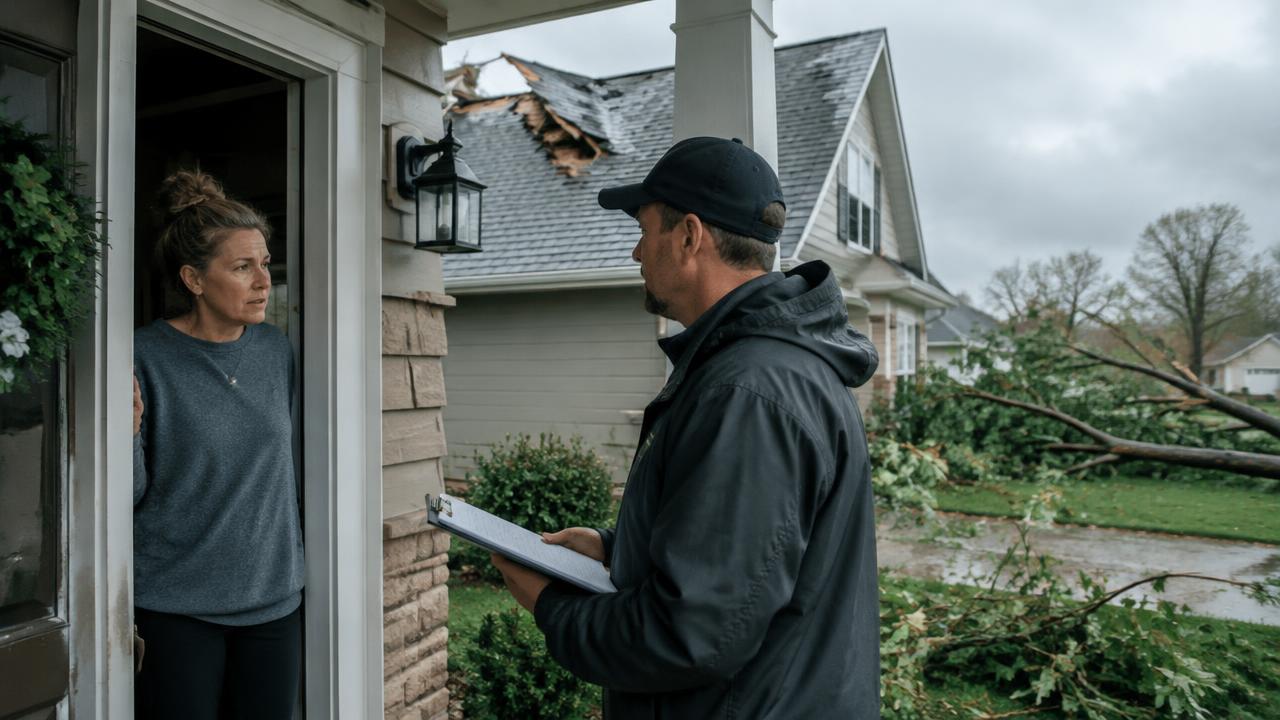
After a storm, unknown roofers may knock on your door promising fast repairs or a free roof through insurance. Here is how to spot pressure tactics and protect your claim and your money.
After hail or high wind, many homeowners suddenly see flyers, yard signs and strangers at the door offering free inspections. Some are honest local roofers. Others travel from storm to storm, collect deposits or insurance money, and leave behind poor work or none at all. People often call them storm chasers.
The U.S. Federal Trade Commission warns that scammers follow weather reports and target people who need repairs quickly. This guide explains the common tactics, what to do before you sign anything, and how to protect your insurance claim. It is general information, not legal or insurance advice.
Common storm-chaser tactics
Pressure is the main tool. A scammer wants a signature before you have time to compare estimates, call your insurer or check a license.
- Unsolicited door knocking right after a storm, often with out-of-area vehicles or temporary phone numbers.
- Claims that a discount only applies if you sign right now.
- Saying a license is not needed for the work.
- Asking for full payment up front, or payment in cash, wire transfer, gift card, cryptocurrency or a payment app.
- Asking you to sign a blank contract or a form you have not read.
- Pushing you toward a lender they know to pay for the work.
Insurance-related red flags
Many storm scams involve the insurance claim itself. A contractor can point out damage, but your insurer decides what the policy covers. Be careful when someone promises an outcome only your insurer can determine.
- Promising a "free roof" or offering to cover or waive your deductible — ask your insurer and check your state's rules before agreeing to anything like this.
- Asking you to sign over your insurance check, or to sign papers that let them deal with your insurer for you, before you understand what they do.
- Offering to "find" extra damage, or damage you never saw before they went on the roof.
- Claiming they can help you qualify for disaster aid for a fee — FEMA does not charge application fees.
Related service:Storm damage roof repair →Storm damage restoration →
What to do before you sign anything
Take a breath. Unless water is actively entering, most permanent repairs can wait a few days while you check people out.
- Photograph damage from the ground and inside the attic or ceilings, with dates.
- Call your insurance company yourself to report the claim and ask what is covered.
- Get written estimates from more than one contractor and compare the scope, not just the total.
- Check the contractor's license with your state or local licensing office, and ask for proof of insurance.
- Search the company name with words like "scam" or "complaint" and look at a range of review sources.
- Read the full contract before signing, and keep a copy.
Related service:Roof inspection →
Paying safely for storm repairs
The FTC suggests avoiding full payment up front and not making the final payment until the work is done and you are satisfied. For large insurance-funded jobs, ask your bank or mortgage company how staged payments can be released as each part of the work is approved, rather than handing the insurance check to a contractor.
- Pay by check or credit card where possible so there is a record.
- Tie each payment to completed work written in the contract.
- Get lien releases or receipts for payments, and keep every invoice.
If you need an emergency tarp first
Active leaks are a real emergency. Temporary protection such as a tarp is reasonable, but keep it separate from the full repair. Ask for a written price for the temporary work only, keep the receipt for your insurer, and do not sign a full replacement contract just to get a tarp installed.
Related service:Emergency roofing services →Roof repair →
How to report a suspected scam
If you think you were targeted, stop payment where possible and keep all paperwork, photos and messages. Report it to the FTC at ReportFraud.ftc.gov, to your state attorney general's consumer protection office, and to your insurance company if your claim was involved. Reporting helps protect your neighbors after the same storm.
Frequently asked questions
Sources and further reading
Emergency roof leak?
What to do while you wait for a roofer
- Stay off the roof, especially in wind, rain, ice, or darkness.
- Move furniture, electronics, and valuables away from the drip.
- Catch water with buckets and towels; a small hole in a bulging ceiling can relieve trapped water.
- Turn off power to any area where water reaches lights, outlets, or fixtures.
- Photograph the damage inside and out (from the ground) for insurance records.
- Call to ask about connecting with an independent contractor for tarping and repair.
Contractor availability and response times vary by location.
This article is general information, not professional advice. Conditions, codes and requirements vary by location — always confirm details with a licensed, insured contractor in your area.