When a commercial roof starts leaking, protecting occupants, inventory and equipment comes first. Use this response plan to organize a safe handoff from immediate protection to professional roof repair.
A leak above a warehouse aisle, tenant suite or electrical room can interrupt a business before anyone understands its source. The first task is not to find a bucket on the roof; it is to protect people and keep a developing roof problem from becoming an indoor safety incident.
This guide is for owners, facility managers and tenants coordinating a commercial response. It complements an emergency home-leak checklist by focusing on building access, equipment, communication, documentation and the handoff to permanent repairs.
Recognize a situation that needs emergency help
An uncontrolled leak, displaced roofing, a fallen tree or water reaching sensitive equipment needs prompt professional assessment. A small stain with no active water still deserves investigation, but it may call for a scheduled inspection rather than a rooftop emergency response.
If you see structural movement, a sagging ceiling, smoke, electrical arcing or suspect a gas hazard, leave the affected area and contact emergency services or the relevant utility. Do not enter the area to recover stock or switch off wet equipment.
Related service:Emergency roofing services →
Protect people before property
Restrict access below the leak and inform the person responsible for site safety. Move unaffected goods only where safe. Use containers to catch water only when placement does not require standing under a damaged ceiling or beside electrical hazards.
Have authorized personnel evaluate shutdowns and isolation procedures. Do not tell untrained staff to operate electrical panels, climb into unstable ceiling spaces or walk on a roof to clear a drain during a storm.
- Mark wet floors and keep evacuation routes clear.
- Keep visitors and staff out of the affected area.
- Notify building management and affected tenants.
- Use your site's emergency procedures for equipment and utility hazards.
What to tell an emergency roofing contractor
Describe the building, visible damage and whether the leak is active. Give safe access instructions, roof height, known membrane type, rooftop equipment locations and any current warranty information. The contractor needs enough information to plan safe access and bring compatible materials.
Ask whether the visit is an assessment, temporary protection or a permanent repair. Confirm call-out charges, authorization limits and what happens if weather prevents roof access. A phone call cannot establish that a roof is safe to walk on.
Related service:Commercial roofing →
Temporary protection has limits
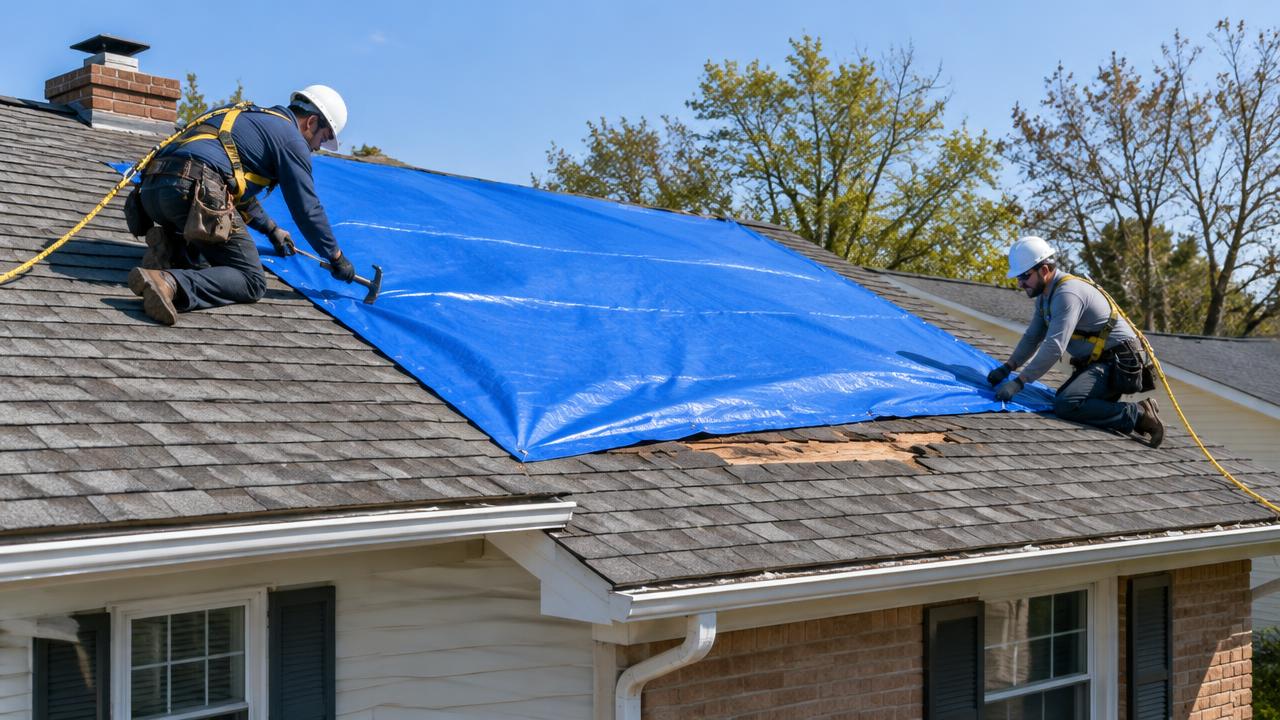
A contractor may recommend tarping or another compatible temporary measure when conditions allow. Wind, lightning, wet surfaces, damaged decking or difficult access can delay rooftop work. An emergency request does not remove these hazards.
Temporary protection is not automatically a lasting repair or a warranty-covered intervention. Get a written description of what was installed, its limitations and any monitoring or follow-up required. Ask the warranty provider whether emergency work needs authorization.
Document damage without delaying safety measures
Take safe indoor and ground-level photos, noting time, weather and the locations of drips. Water can travel before it appears indoors, so a stain does not prove the roof opening is directly above it. Keep inspection reports, receipts and communications together.
Notify your insurer when appropriate and ask how it wants temporary work documented. No contractor can guarantee claim coverage. Coordinate with management so tenants, facilities staff and the insurer receive consistent information.
- Record affected rooms and equipment without exposing sensitive business records.
- Keep invoices for temporary protection and cleanup.
- Ask the roofer for photos and findings from the roof inspection.
- Note any remaining water entry after temporary protection.
Move from emergency protection to a permanent repair
Once conditions are safe, arrange a diagnosis covering seams, drains, flashing, penetrations and possible wet insulation. Permanent work should address the entry point and damaged materials rather than simply covering the visible symptom.
Get a repair proposal specifying compatible products, hidden-damage allowances and warranty terms. A recurring or widespread problem may require broader repairs or replacement, but a single leak does not establish that an entire roof must be replaced.
Related service:Roof repair →Roof inspection →
Build a roof emergency file before the next storm
Keep roof drawings, warranty documents, access instructions, inspection records and contractor contacts where authorized staff can find them. Agree who can approve temporary work and how tenants should report leaks.
Review maintenance and drainage after the incident. Rapid Roof Repair Pros is a connection service, not the contractor performing the work; contractor availability, pricing and response times vary by location.
Related service:Roof maintenance →
Frequently asked questions
Sources and further reading
Emergency roof leak?
What to do while you wait for a roofer
- Stay off the roof, especially in wind, rain, ice, or darkness.
- Move furniture, electronics, and valuables away from the drip.
- Catch water with buckets and towels; a small hole in a bulging ceiling can relieve trapped water.
- Turn off power to any area where water reaches lights, outlets, or fixtures.
- Photograph the damage inside and out (from the ground) for insurance records.
- Call to ask about connecting with an independent contractor for tarping and repair.
Contractor availability and response times vary by location.
This article is general information, not professional advice. Conditions, codes and requirements vary by location — always confirm details with a licensed, insured contractor in your area.