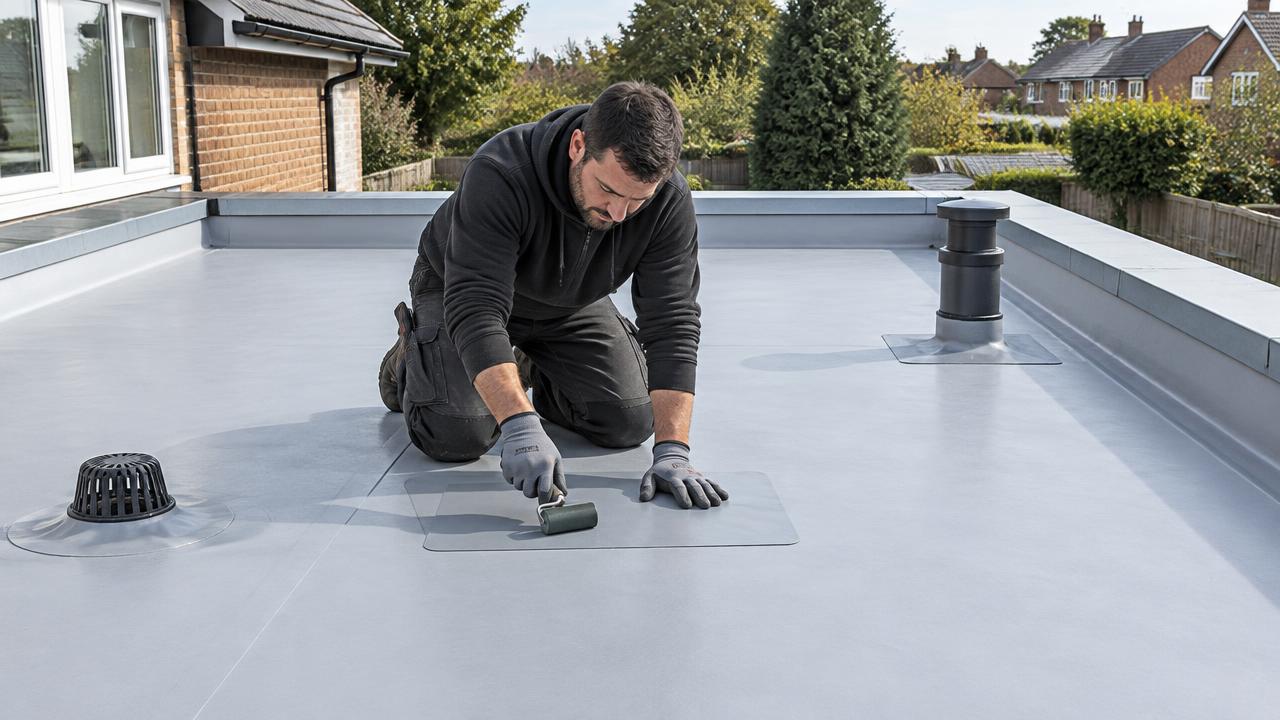
Understand flat roof leaks, damaged seams, ponding water and flashing problems, plus repair options and the factors that determine an itemized repair quote.
A flat roof is usually a low-slope roof designed to direct rain toward drains, scuppers or gutters. When that drainage path or the waterproof surface fails, water can reach insulation, decking and interior finishes. The right repair starts with identifying the roof system and the source of the leak, rather than covering every suspicious spot with sealant.
This guide explains what a homeowner can observe safely, which repair options to discuss with a contractor, and how to compare estimates without relying on an unsupported nationwide price. It applies to low-slope residential roofs and extensions; commercial roofs may have additional access, equipment and maintenance requirements.
Common flat roof problems and their warning signs
Interior stains show where water becomes visible, not necessarily where it entered. Water may travel along decking or insulation before reaching a ceiling. A contractor should inspect the surrounding roof details instead of assuming the opening is directly above the stain.
- Open seams or laps: membrane joints that separate can allow rain beneath the roof covering.
- Punctures and tears: fallen branches, equipment servicing or misplaced foot traffic can damage a membrane.
- Deteriorated flashing: drains, plumbing vents, parapet walls and skylights need watertight transitions.
- Standing water: blocked outlets, inadequate slope or sagging areas can stop water draining normally.
- Blisters, cracking or loose edges: these need diagnosis; their significance depends on the roof system and condition below it.
Related service:Flat roofing →Roof inspection →
What to do when a flat roof starts leaking
Keep people away from sagging ceilings and any area where water could contact electrical fixtures. Do not touch wet electrical equipment or attempt to operate a breaker panel through standing water. Seek emergency assistance if there is an electrical or structural hazard.
Move belongings only if the room is safe, collect drips without standing under a bulging ceiling, and photograph the visible damage. Note when the leak happens and whether it follows wind-driven rain or water collecting on the roof. Do not climb onto a wet roof or probe a soft area; damaged decking may not support your weight.
Ask a roofing professional about temporary protection and a permanent diagnosis. Temporary work should be documented, especially if you intend to ask your insurer about coverage. Insurance terms and maintenance exclusions vary by policy.
Related service:Emergency roofing services →Roof repair →
Why the membrane type changes the repair
EPDM is a rubber membrane; TPO and PVC are different thermoplastic systems. Modified bitumen and built-up roofing use asphalt-based assemblies. Appearance alone may not reliably identify an older or coated roof, so give the contractor any installation records and warranty paperwork you have.
A repair must use materials and preparation methods approved for the existing system. Depending on the product, that can involve primers, compatible tapes or patches, heat-welded seams, or system-specific flashing. A generic roofing cement is not a universal solution: incompatible products can fail to bond or damage the surface. Manufacturer instructions govern the method.
Repair options: patching, flashing work, drainage and coatings
A localized patch may suit a small puncture when the surrounding membrane and underlying materials are sound. Failed seams may need a compatible seam repair; a leaking penetration may require rebuilding its flashing rather than adding another bead of sealant. The contractor should explain how the repair addresses the actual entry point.
Drainage work can involve clearing an outlet, repairing a drain detail or evaluating the roof's slope and deck. Repeated standing water deserves investigation rather than repeated surface patches. Structural or slope changes may need a designer and local approval.
A restoration coating may be appropriate for some serviceable roofs after inspection, preparation and necessary repairs. It is not suitable for every membrane, and it does not dry saturated insulation or strengthen deteriorated decking. Ask about substrate compatibility, drainage requirements and the exact warranty conditions before agreeing to a coating.
Related service:Roof coatings →Roof maintenance →
Flat roof repair costs: what should be in your estimate?
There is no single reliable repair price for every flat roof. A small accessible membrane repair is a different scope from removing wet insulation, rebuilding a drain and replacing damaged decking. An inspection-based local quote is more useful than an online number that does not describe the roof or the work.
Ask contractors to separate investigation, temporary protection and permanent repair costs. If hidden damage is possible, request a written allowance or unit price and a process for approving extra work. Compare estimates for the same scope, not simply the lowest total.
- Roof system, compatible repair products and the size of the affected area.
- Height, access, fall protection and obstacles such as rooftop equipment.
- Removal and replacement of wet insulation, damaged decking or existing roof layers.
- Drain, flashing and edge-detail repairs, disposal, and any required permits.
- Weather constraints, emergency scheduling and material or workmanship warranty terms.
Related service:Roofing consultation services →
When replacement may make more sense than another patch
Repair is often worth considering when damage is limited and the surrounding roof is sound. Widespread moisture, recurring leaks in several areas, badly deteriorated seams or failing decking may make a larger restoration or replacement more practical. Age alone does not settle the question; remaining condition and repair history matter.
Ask for photographs and an explanation of any moisture investigation. If a contractor proposes installing a new system over the existing roof, ask how wet materials will be handled and whether the assembly meets local code and manufacturer requirements. A roof recover is not automatically permissible or appropriate.
Related service:Roof replacement →
Questions to ask before authorizing work
Request a written diagnosis, scope and warranty. Verify the contractor's insurance and any licensing required locally, and clarify whether the existing manufacturer's warranty requires an authorized installer or notification before repairs.
- What roof system do I have, and how was the leak source confirmed?
- Are the insulation and decking dry and sound beneath the repair?
- Will this work address drainage or only the surface opening?
- Which products and preparation steps will be used?
- What is excluded, and how will additional damage be priced?
Frequently asked questions
Sources and further reading
This article is general information, not professional advice. Conditions, codes and requirements vary by location — always confirm details with a licensed, insured contractor in your area.