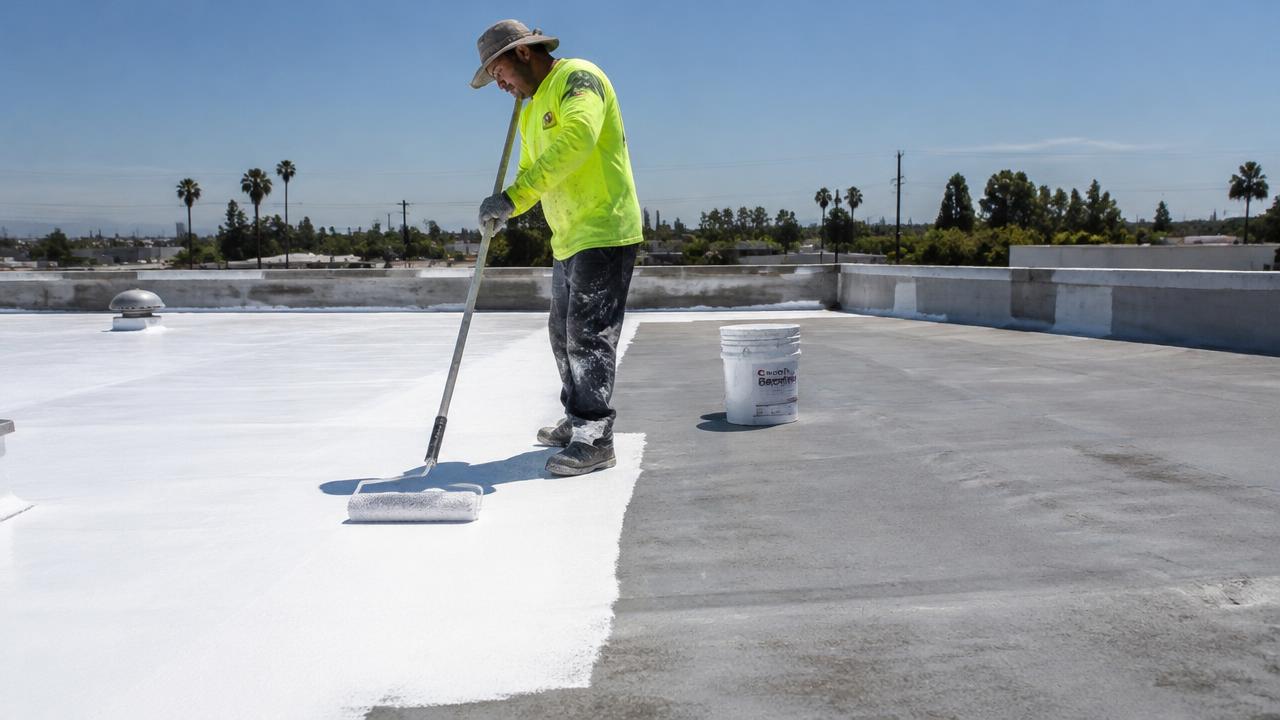
Compare acrylic, silicone and urethane roof coatings, learn what affects coating cost, and spot the signs that a roof needs recoating — or something more.
A roof coating is a liquid-applied layer that cures into a seamless, flexible membrane over an existing roof. Done on the right roof at the right time, it can help extend the roof's useful life and improve reflectivity.
Coatings are not a cure-all, though. This guide covers the main coating types, what affects cost, and how to tell when a roof needs recoating versus repair or replacement.
Main types of roof coatings
Most coatings used on low-slope roofs fall into a few families:
- Acrylic — water-based, reflective and generally budget-friendly; best on roofs that drain well
- Silicone — UV-stable and moisture resistant; often chosen for roofs with some ponding
- Urethane (polyurethane) — tough and impact resistant; suits roofs with more foot traffic or equipment
- Asphalt-based and other specialty coatings — used on certain substrates and systems
Related service:Roof coatings →
Which roofs can be coated?
Coatings are commonly applied over metal roofs, modified bitumen, built-up roofs, spray foam and some aged single-ply membranes such as TPO or EPDM. Each substrate may need a specific primer or base coat, so the manufacturer's compatibility guidance should be followed.
Related service:Flat roofing →Metal roofing →
What affects roof coating cost?
Coating estimates vary by roof. The biggest cost factors are:
- Roof size and number of penetrations
- Amount of repair needed first — seams, flashings, blisters and wet areas
- Cleaning and surface preparation required
- Coating type and the total thickness specified
- Reinforcing fabric at seams and details
- Warranty length and manufacturer inspection requirements
Related service:Roofing consultation services →
Signs a roof needs recoating
- Coating is chalking, thinning or wearing through to the base roof
- Cracking, peeling or loss of adhesion in sections
- Seams, fasteners or flashings showing through worn areas
- Reduced reflectivity — the surface stays dirty or darkened
- Small leaks appearing around details the coating used to protect
Related service:Roof inspection →
When a coating is not the right fix
A coating seals the surface — it does not rebuild a failing roof. Ask a contractor about repair or replacement instead if you see:
- Large areas of wet or damaged insulation
- A soft, sagging or rotted roof deck
- Widespread membrane splits or many active leaks
- Major drainage problems that cannot be corrected
Related service:Roof repair →Roof replacement →
How a typical coating project works
- Inspection, often with a moisture survey and adhesion test
- Thorough cleaning of the roof surface
- Repairs to seams, flashings and damaged areas, often with reinforcing fabric
- Primer or base coat if required by the substrate
- Coating applied in one or more passes, allowing each to cure in suitable weather
Related service:Roof maintenance →
Frequently asked questions
Sources and further reading
This article is general information, not professional advice. Conditions, codes and requirements vary by location — always confirm details with a licensed, insured contractor in your area.