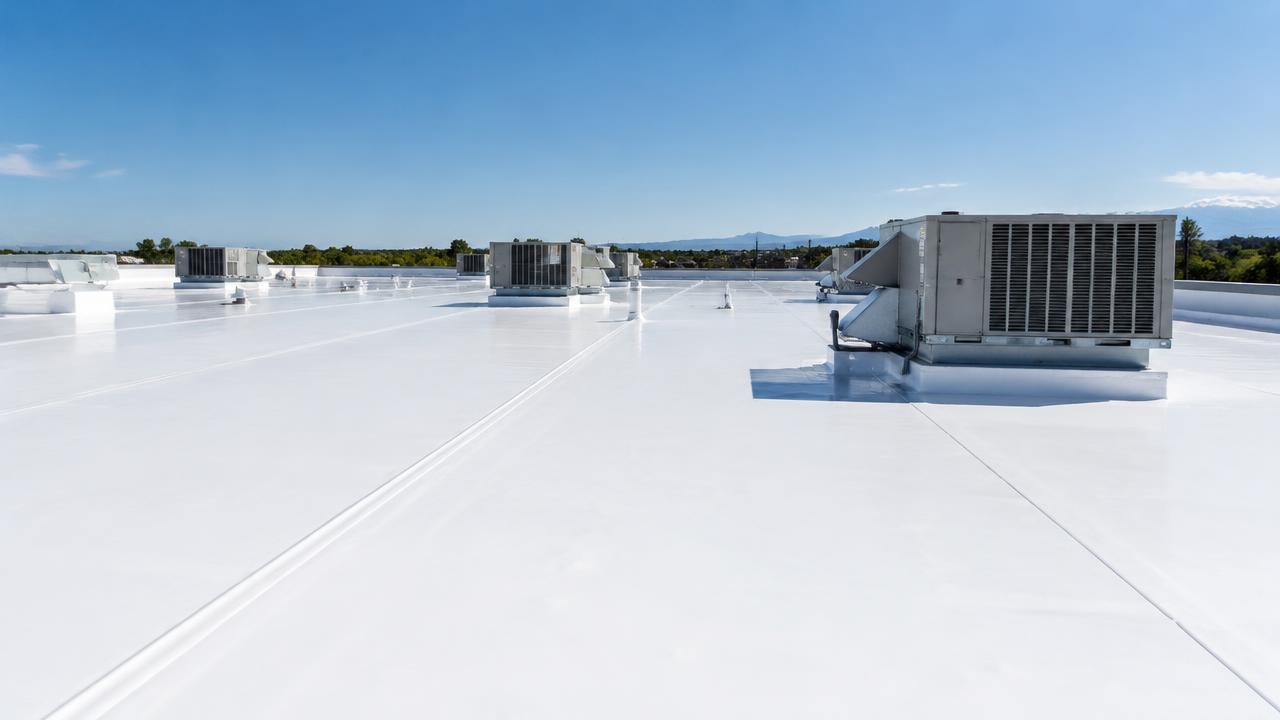
A practical guide to TPO single-ply roofing — how it is built, what affects cost and lifespan, its benefits and limits, and how building owners can compare proposals.
TPO (thermoplastic polyolefin) is a single-ply membrane widely used on flat and low-slope commercial roofs — warehouses, offices, retail centers and schools — and on some low-slope residential roofs too.
This guide explains how a TPO roof is put together, what really drives its cost and lifespan, and the questions to ask before you approve a proposal.
What is a TPO roofing system?
TPO is manufactured in large rolls and installed in sheets across the roof. Overlapping edges are joined by hot-air welding, which fuses the membrane together into a continuous watertight surface.
The visible membrane is only the top layer. Underneath, a typical assembly includes the structural deck, sometimes a vapor retarder, rigid insulation and cover board, all attached in a way that suits the building and local wind requirements.
- Mechanically fastened — membrane and insulation are screwed to the deck with plates along the seams
- Fully adhered — membrane is bonded to the insulation or cover board with adhesive
- Ballasted or induction-welded systems — used on certain buildings depending on structure and design
Related service:Flat roofing →Commercial roofing →
What affects TPO roof cost?
There is no single price for a TPO roof. Contractors base estimates on the specific building, so it is normal for quotes to vary. The main cost drivers are:
- Total roof area and how complex the layout is
- Whether the old roof must be torn off or can be covered (recover), as allowed by local code
- Insulation type and thickness needed to meet energy code
- Membrane thickness and attachment method
- Number of penetrations — HVAC units, pipes, drains, skylights and curbs
- Roof access, building height and safety requirements
- Manufacturer warranty level and required inspections
Related service:Roof replacement →Roofing consultation services →
What affects TPO roof lifespan?
A TPO roof's service life depends less on the label and more on how it was installed and cared for. Poorly welded seams, weak flashing details or standing water can shorten its life significantly.
- Seam weld quality and workmanship at corners, curbs and edges
- Good drainage — water that sits on the roof for long periods stresses the membrane
- Foot traffic around equipment; walkway pads help protect high-traffic areas
- Local climate — heat, UV, hail and wind exposure
- Regular inspections and prompt repair of punctures or open seams
Related service:Roof inspection →
Benefits of TPO roofing
- Heat-welded seams create a strong, continuous waterproof surface
- White, reflective surface can help reduce rooftop heat gain in warm climates
- Lightweight compared with many built-up or ballasted systems
- Flexible installation options for different deck types and wind zones
- Repairs are often possible by cleaning and welding a new patch onto the existing membrane
Limitations to know before you choose TPO
TPO is not the best fit for every roof. Talk through these points with your contractor:
- Some chemicals, oils and kitchen exhaust grease can damage the membrane — ask about alternatives for restaurant or industrial roofs
- Chronic ponding should be corrected with tapered insulation or added drains
- Older or weathered TPO can be harder to weld; repair methods may need to change
- Products differ between manufacturers — compare specifications, not just names
Related service:Roof repair →
Maintenance tips for building owners
- Schedule inspections at least twice a year and after major storms
- Keep drains, scuppers and gutters clear of debris
- Limit rooftop foot traffic and keep sharp tools and debris off the membrane
- Check seams, flashings and curbs around HVAC units
- Keep records of repairs — many warranties require them
Related service:Roof maintenance →Roof coatings →
Questions to ask before signing a TPO proposal
- Is the old roof being removed or recovered, and is that allowed by local code?
- What insulation, membrane thickness and attachment method are specified?
- Who provides the warranty — the manufacturer, the contractor, or both — and what does it cover?
- How will drainage problems be fixed?
- Are you licensed and insured for commercial roofing work in this area?
Frequently asked questions
Sources and further reading
This article is general information, not professional advice. Conditions, codes and requirements vary by location — always confirm details with a licensed, insured contractor in your area.