About this service
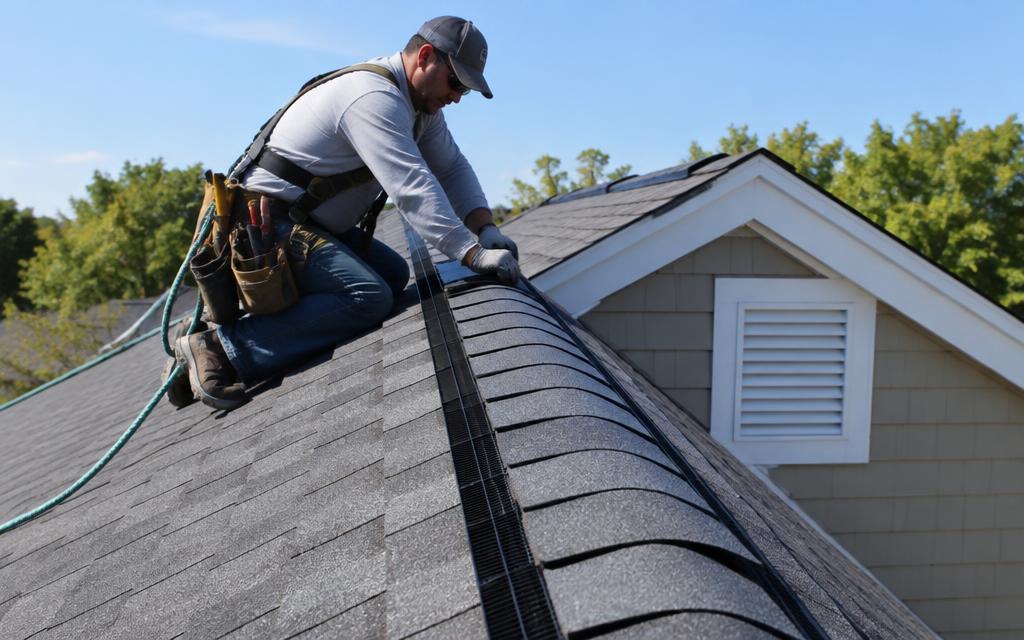
Roof ventilation balances intake air at the eaves with exhaust at the ridge or roof vents. Proper ventilation helps control attic heat in summer, moisture in winter, and can extend the life of roofing materials.
A qualified contractor should evaluate the complete roof assembly before recommending work. The visible symptom may begin at flashing, drainage, ventilation, fasteners, or materials several feet from where moisture appears indoors.
What it generally involves
- Calculating required net free ventilation area for the attic
- Installing or upgrading soffit and ridge vents
- Adding powered vents or turbines where passive flow is insufficient
- Verifying insulation doesn't block intake airflow
Things to consider
- Ventilation must be balanced — exhaust without intake doesn't work.
- Mixing exhaust vent types can short-circuit airflow.
- Poor ventilation can void some shingle warranties.
- Ask the contractor about permits and code requirements that apply in your city and county.
What to ask before work starts
- • What condition is causing the problem, and how was it confirmed?
- • Which materials, preparation steps, and disposal costs are included?
- • What workmanship coverage applies to this specific type of roofing work?
- • Are permits, weather protection, cleanup, and final inspection included?
Common questions
What are signs of poor roof ventilation?
Hot upper floors in summer, ice dams in winter, musty attic smells, and prematurely aging shingles can all point to ventilation problems.
Can ventilation be added to an existing roof?
Usually yes — ridge, soffit, or roof vents can often be retrofitted. A contractor can evaluate your attic's current airflow.
Does this website design ventilation systems?
No. Assessment and installation are done by the independent contractor you hire.