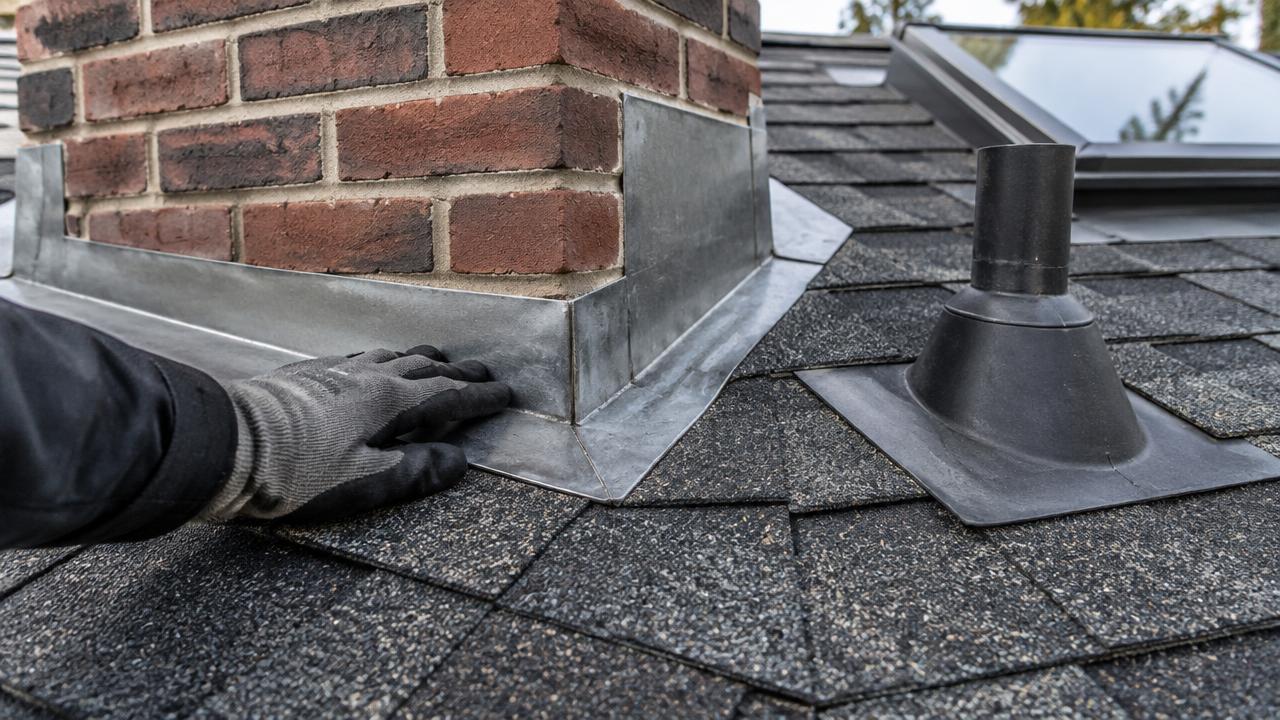
Find out why roof flashing leaks around chimneys, plumbing vents and skylights, the warning signs to watch for, and the repair options a roofer may recommend.
Flashing is the metal or membrane material that directs water away from joints in a roof — where the roof meets a chimney or wall, around plumbing and exhaust vents, at skylights and in valleys. Shingles shed water across the open roof; flashing handles the places where shingles alone cannot.
Because these joints move with temperature and weather, flashing is one of the most common sources of roof leaks. This guide explains how each area fails, what you can check safely from the ground or attic, and how professionals repair it.
Signs of failing roof flashing
- Ceiling or wall stains near a chimney, skylight or bathroom vent.
- Water marks on attic rafters or decking around a penetration.
- Rusted, bent, lifted or missing metal flashing visible from the ground.
- Cracked or split rubber boots around plumbing vent pipes.
- Old caulk or roofing cement that is cracked, peeling or patched repeatedly.
- Condensation or drips around a skylight frame.
Related service:Roof inspection →
Chimney flashing leaks
A chimney typically uses step flashing woven with the shingles along the sides, counterflashing set into the mortar joints to cover it, a front apron, and often a cricket on the uphill side of wider chimneys to divert water and debris.
Leaks occur when counterflashing pulls out of the mortar, sealant fails, step flashing rusts, or debris builds up behind the chimney. Water can also enter through cracked bricks, deteriorated mortar or a damaged chimney crown, so a roofer should check the masonry too.
Related service:Roof repair →
Plumbing vent and exhaust vent leaks
Pipe boots have a rubber collar that seals around the pipe. Sun exposure eventually cracks the rubber, letting water run down the pipe into the attic. Exhaust vents and roof vents can leak if their flanges are loose, fasteners are exposed, or shingles above them were installed incorrectly.
- Replacing a cracked boot is usually a small repair when caught early.
- Exposed nail heads near vents should be sealed or replaced.
- Damaged roof vents may be replaced to restore ventilation and keep water out.
Related service:Roof ventilation solutions →
Skylight flashing leaks
Skylights rely on a flashing kit that layers with the shingles. Leaks can come from worn flashing, failed seals in the skylight unit, or debris trapping water at the uphill side. Condensation can look like a leak, so note whether drips appear during rain or on cold mornings.
Related service:Skylight repair →Skylight installation →
Wall, valley and edge flashing
Where a roof meets a sidewall or dormer, step flashing and properly lapped siding or housewrap keep water out. Valleys and drip edge also act as flashing; damaged drip edge can let water reach fascia and soffits.
Related service:Soffit and fascia installation →
How roofers repair flashing
Roofing cement or caulk can stop a drip temporarily, but it dries out. A lasting repair restores layered flashing that sheds water by design.
- Resealing: cleaning and resealing counterflashing or fasteners when the metal is still sound.
- Re-setting counterflashing: cutting a fresh mortar reglet and securing new counterflashing.
- Replacing step flashing: lifting shingles and installing new pieces so each shingle course overlaps correctly.
- Replacing pipe boots and vent flanges.
- Installing a new skylight flashing kit or replacing the skylight unit.
- Adding a cricket behind a wide chimney during reroofing.
What you can do safely
Use binoculars from the ground and check the attic with a flashlight after rain. Catch drips, photograph the damage and stay off the roof — steep or wet roofs around chimneys are a fall hazard. Ask a roofer to inspect flashing during reroofing or after major storms.
Related service:Storm damage roof repair →Roof maintenance →
Frequently asked questions
Sources and further reading
This article is general information, not professional advice. Conditions, codes and requirements vary by location — always confirm details with a licensed, insured contractor in your area.