Roof leaking during a storm? Follow these safe, step-by-step actions to limit water damage, document it for insurance, and get emergency tarping and repair.
Water dripping through a ceiling is stressful, but a few calm steps in the first hour can prevent much larger damage to insulation, drywall, flooring and wiring.
Step 1: Make the area safe
If water is near light fixtures, outlets or appliances, switch off that circuit at the breaker panel. If the ceiling is sagging heavily, keep people and pets out of the room.
Step 2: Contain the water
Limit how far the water spreads inside your home:
- Place buckets, bins or towels under every drip point.
- Move furniture, rugs and electronics out of the area or cover them with plastic.
- If a ceiling bulge is holding water, a small puncture at its lowest point over a bucket can release it in a controlled way.
- Check the attic (only if it's safe) for wet insulation and pooling water.
Step 3: Document the damage
Take dated photos and videos of interior stains, wet materials and the roof from the ground. Keep receipts for buckets, tarps, fans and any emergency service — insurers often ask for them.
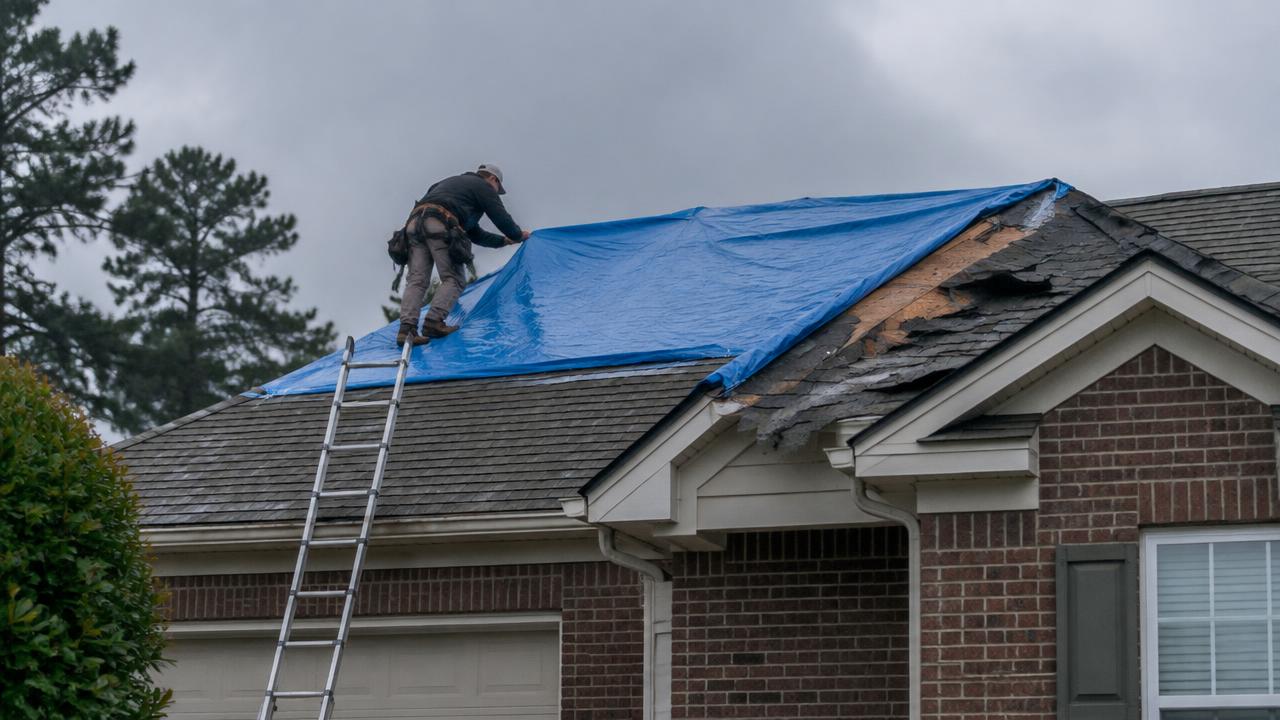
Step 4: Get emergency tarping
A properly secured tarp keeps further rain out until a permanent repair is possible. This is work for a roofing contractor with the right safety equipment, especially on steep or wet roofs.
Related service:Emergency roofing services →Storm damage roof repair →
Step 5: Plan the permanent repair
Once the weather clears, a contractor can inspect the roof, find the true source of the leak — often flashing, vents or valleys rather than the spot above the drip — and recommend repair or replacement.
Related service:Roof repair →Roof inspection →
Frequently asked questions
Emergency roof leak?
What to do while you wait for a roofer
- Stay off the roof, especially in wind, rain, ice, or darkness.
- Move furniture, electronics, and valuables away from the drip.
- Catch water with buckets and towels; a small hole in a bulging ceiling can relieve trapped water.
- Turn off power to any area where water reaches lights, outlets, or fixtures.
- Photograph the damage inside and out (from the ground) for insurance records.
- Call to ask about connecting with an independent contractor for tarping and repair.
Contractor availability and response times vary by location.
This article is general information, not professional advice. Conditions, codes and requirements vary by location — always confirm details with a licensed, insured contractor in your area.