Know when a flat roof needs replacement, compare common low-slope roofing materials, and understand the factors that determine a flat roof replacement quote.
Flat and low-slope roofs on homes, garages, extensions and commercial buildings eventually reach a point where patching no longer keeps water out. Replacement removes the worn system, fixes damaged decking and insulation, and is the best opportunity to improve drainage.
This guide explains the signs that point to replacement, how the main materials compare, and what drives the cost. We do not publish price figures because local labor, material and code requirements vary widely — the factors below help you read and compare quotes.
Signs it is time to replace a flat roof
- Leaks return after repeated repairs, or appear in several places.
- Large areas of soft, spongy roof surface or sagging decking.
- Wet insulation confirmed over a significant portion of the roof.
- Widespread cracking, shrinkage, blistering or seam failure.
- Persistent ponding that repairs and drain cleaning cannot fix.
- The roof is near the end of the expected life for its material.
Related service:Roof inspection →
Repair, recover or replace?
Localized damage on a dry, sound roof can usually be repaired. A recover — a new membrane over the old one — may be allowed by code when there is only one existing roof layer and the insulation is dry. Full tear-off replacement is needed when water has saturated the system or the deck is damaged.
Related service:Flat roofing →Roof repair →
Flat roof materials compared
The right choice depends on climate, building use, rooftop traffic, budget and local energy code requirements. Ask your contractor why they recommend a specific system for your roof.
- EPDM (rubber): a flexible synthetic rubber membrane with long field experience; seams are taped or adhered.
- TPO: a single-ply thermoplastic, usually white and reflective, with heat-welded seams.
- PVC: a thermoplastic with heat-welded seams and good resistance to many chemicals and grease — often chosen for restaurants.
- Modified bitumen: asphalt-based rolls applied by torch, heat, cold adhesive or self-adhesion, often in two-ply systems.
- Built-up roofing (BUR): multiple layers of bitumen and felts topped with gravel or a cap sheet.
- Liquid-applied systems: coatings used on sound roofs to restore and extend life, not to replace wet materials.
What drives flat roof replacement cost
- Roof size and the number of existing layers to tear off.
- Amount of damaged decking or wet insulation that must be replaced.
- Insulation thickness required by local energy codes, and tapered insulation for drainage.
- Membrane type, thickness and attachment method (mechanically fastened, adhered or ballasted).
- Number of penetrations, skylights, curbs, parapet walls and edge details.
- Access, height, disposal and permit requirements.
- Manufacturer warranty level selected.
Related service:Roof replacement →
What the replacement process looks like
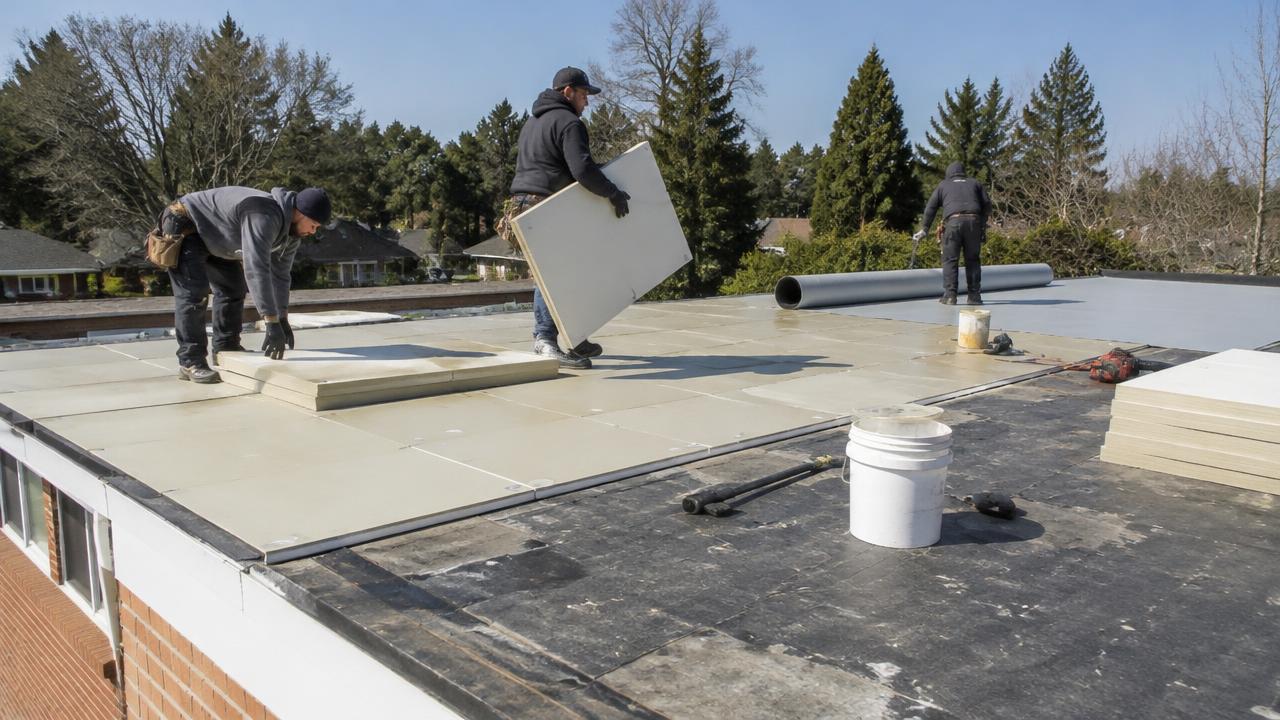
Typical steps: inspection and moisture check, permit, tear-off, deck repair, new insulation and cover board, membrane installation, flashing and edge metal, then a final inspection. Weather affects scheduling — membrane roofs should be installed and sealed in dry conditions.
Improve drainage while you replace
Replacement is the best time to fix ponding. Tapered insulation, crickets around curbs and added or enlarged drains help water leave the roof and can extend the new roof's life.
Related service:Roof ventilation solutions →
How to compare quotes
- Confirm each quote includes tear-off, deck repair allowances and disposal.
- Compare membrane type and thickness, insulation R-value and attachment method.
- Check flashing details and edge metal are included.
- Ask what the manufacturer and workmanship warranties cover and for how long.
- Verify licensing where required, insurance and references.
Related service:Roofing consultation services →
Frequently asked questions
Sources and further reading
This article is general information, not professional advice. Conditions, codes and requirements vary by location — always confirm details with a licensed, insured contractor in your area.