Learn why metal roofs leak, how fasteners, flashing, corrosion and panel damage affect repairs, and when a metal roofing professional should inspect your roof.
A metal roof can develop a leak even when most of its panels still look sound. Weathered pipe boots, damaged flashing or an incorrectly installed fastener can let water enter at a small detail. Effective repair means locating that detail and preserving the way the roofing system drains water and accommodates movement.
This guide focuses on maintaining and repairing an existing metal roof, rather than comparing metal with shingles. Use it to recognize warning signs from a safe location and prepare questions for a contractor experienced with your panel system.
Start by identifying your metal roof system
Exposed-fastener panels have visible screws, typically with sealing washers. Standing-seam systems generally conceal attachment clips or fasteners beneath raised seams. Metal shingles and specialty profiles have their own interlocking and fastening details. A repair approach appropriate for one system may be wrong for another.
Keep installation documents, the panel manufacturer's name and warranty information together. These can help a contractor select replacement components, sealants and approved repair procedures. A visual inspection alone may not reveal the original attachment design or underlayment condition.
Related service:Metal roofing →
Loose screws and deteriorated sealing washers
On an exposed-fastener roof, a screw that backs out or a deteriorated washer can become a water entry point. Overdriven fasteners can distort washers, while underdriven screws may not make the intended seal. Enlarged holes and a weakened substrate can also prevent a replacement screw from holding properly.
The solution is not to tighten every screw as hard as possible. A roofing professional should evaluate washer condition, attachment and hole size, then use the manufacturer's specified repair. Covering defective screws with sealant may conceal the problem without restoring a reliable fastening detail.
Related service:Roof repair →
Leaks at flashing, pipe boots and roof transitions
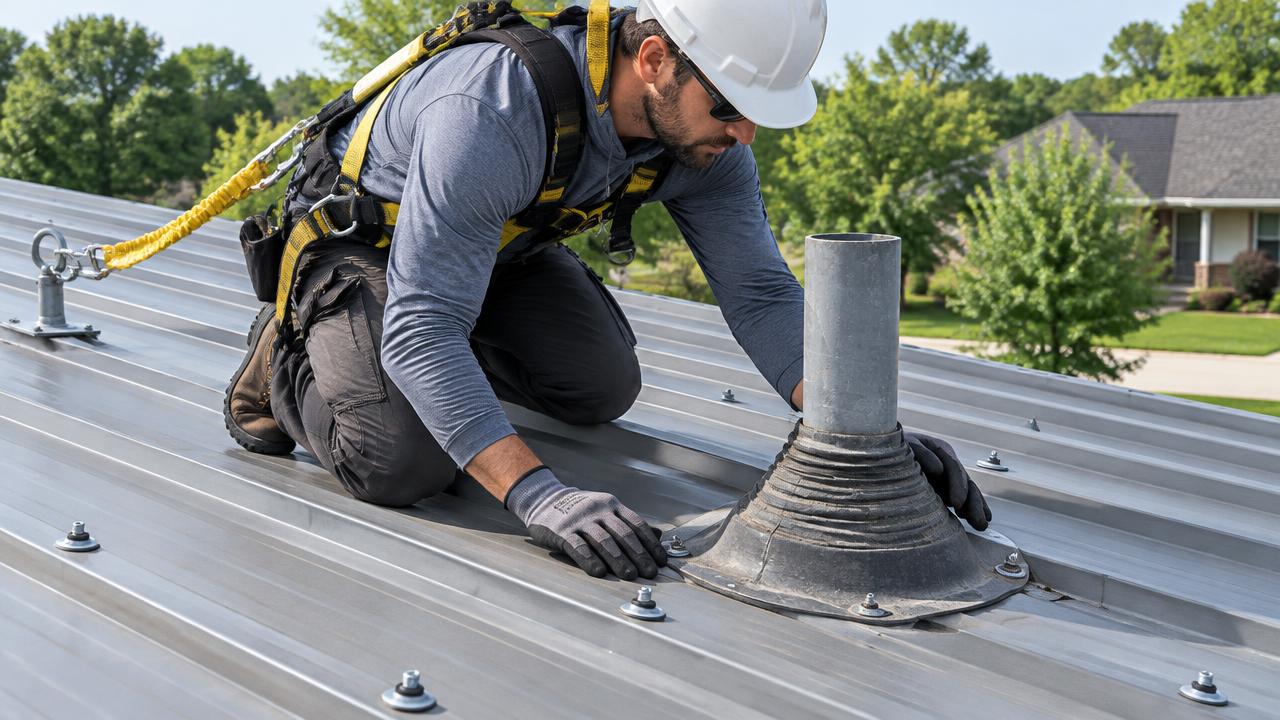
Plumbing vents, chimneys, skylights, valleys and roof-to-wall transitions interrupt the panel surface. Cracked pipe boots, displaced flashing or failed seals at those details can let wind-driven rain beneath the roof. Water appearing indoors may travel along the roof assembly before it reaches a ceiling.
Ask whether the flashing needs replacement, improved attachment or a corrected water-shedding detail. A repair should account for how the panel system expands and contracts. Sealing an intended drainage path or restraining panel movement can create another problem.
Related service:Roof inspection →Skylight repair →
Corrosion, scratches and incompatible materials
Scratches, cut edges or damaged protective finishes can require attention, especially when corrosion is developing. The severity depends on the base metal, coating and exposure; not every mark calls for repainting. Ask the panel manufacturer or an experienced installer about approved cleaning and touch-up procedures.
Dissimilar metals, certain runoff conditions and incompatible sealants can contribute to deterioration. A contractor should check nearby flashing and attachments rather than treating rust as only a cosmetic stain. Deep corrosion, holes or metal thinning may require panel replacement rather than a surface coating.
Related service:Roof maintenance →
Dents, seam damage and storm-related problems
Hail or falling debris may leave dents without creating an opening, but impact can also damage seams, flashings or panel finishes. An inspection should distinguish appearance changes from damage affecting watertightness, attachment or the protective coating. A photograph of a dent alone cannot establish insurance coverage.
Wind-lifted edges, displaced panels, open seams or broken attachments deserve prompt professional attention. Do not try to hammer standing seams back into place or drill new holes as a quick fix. Panel replacement can involve adjoining panels and concealed clips, making it more involved than replacing a visible sheet.
Related service:Storm damage roof repair →
Safe checks homeowners can make
Inspect from the ground with binoculars and note new ceiling stains, attic moisture or visible edge damage. Record when a leak occurs and photograph accessible areas without entering unsafe spaces. Remove people from beneath a sagging ceiling and seek assistance if water threatens electrical equipment.
Avoid walking on the roof. Metal can be slippery, and stepping in the wrong location can deform a panel or damage its finish. Do not pressure-wash, scrape coatings, disturb attachments or use a ladder as a substitute for proper roof-access and fall-protection equipment.
When to call a metal roofing professional
Arrange an inspection for recurring leaks, damaged seams or flashing, growing corrosion, displaced panels or a cluster of loose fasteners. An active leak or wind-loosened panel needs more urgent assessment; unsafe access and severe weather may affect when work can proceed.
- Choose someone experienced with your panel profile and attachment system.
- Ask for photographs identifying the entry point and the proposed permanent repair.
- Confirm compatible fasteners, sealants, flashing and replacement panel materials.
- Check insurance, locally required licensing and any manufacturer warranty restrictions.
- Get temporary protection and permanent work described separately in writing.
Related service:Emergency roofing services →Roofing consultation services →
Repair costs and the decision to replace
Metal roof repair costs depend on the roof profile, material, height, access and damage extent. Replacing an accessible pipe boot is not the same scope as removing standing-seam panels to repair concealed attachments or rotten decking. Matching discontinued profiles and finishes can also complicate the work.
Request itemized quotes covering diagnosis, access equipment, replacement components, disposal and any underlayment or deck repairs. Ask how hidden damage will be approved and priced. No nationwide price can substitute for that roof-specific scope.
A targeted repair may be sensible when surrounding panels and attachments remain sound. Widespread corrosion, recurring leaks or significant installation defects may justify broader corrective work or replacement. Ask for evidence and a comparison of both options before deciding; a coating or roof recover is not automatically appropriate for every system.
Related service:Roof replacement →
Frequently asked questions
Sources and further reading
This article is general information, not professional advice. Conditions, codes and requirements vary by location — always confirm details with a licensed, insured contractor in your area.