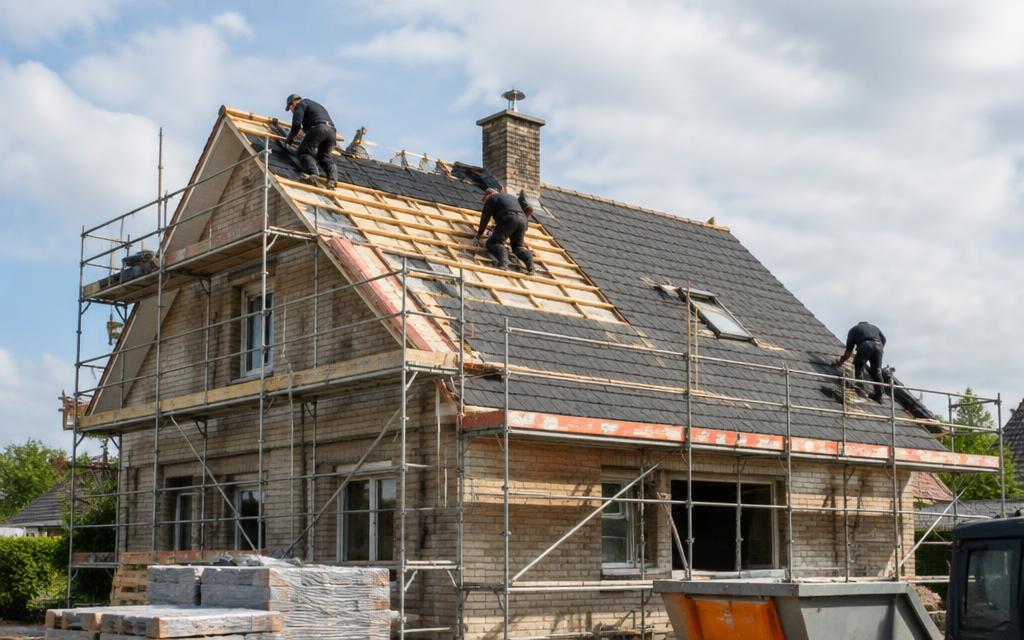
About this service
Storm damage restoration goes beyond spot repair: it addresses roofing, decking, gutters, siding, and interior water damage after significant weather events. Projects often involve insurance coordination and phased reconstruction.
A qualified contractor should evaluate the complete roof assembly before recommending work. The visible symptom may begin at flashing, drainage, ventilation, fasteners, or materials several feet from where moisture appears indoors.
What it generally involves
- Full-property damage assessment and documentation
- Temporary protection of exposed areas
- Repair or replacement of roofing and damaged decking
- Restoration of related elements such as gutters and flashing
Things to consider
- Thorough documentation at the start supports the insurance process.
- Restoration scopes should be itemized in writing before work begins.
- After widespread regional storms, contractor schedules fill quickly — plan accordingly.
- Ask the contractor about permits and code requirements that apply in your city and county.
What to ask before work starts
- • What condition is causing the problem, and how was it confirmed?
- • Which materials, preparation steps, and disposal costs are included?
- • What workmanship coverage applies to this specific type of roofing work?
- • Are permits, weather protection, cleanup, and final inspection included?
Common questions
What's the difference between storm repair and restoration?
Repair addresses isolated damage; restoration covers broader reconstruction across multiple building elements after major events.
Will my insurance cover storm restoration?
That depends on your policy and the cause of damage. Contractors can document damage, but coverage decisions belong to your insurer.
Does this website perform restoration work?
No. We connect property owners with independent contractors who perform and warrant their own work.