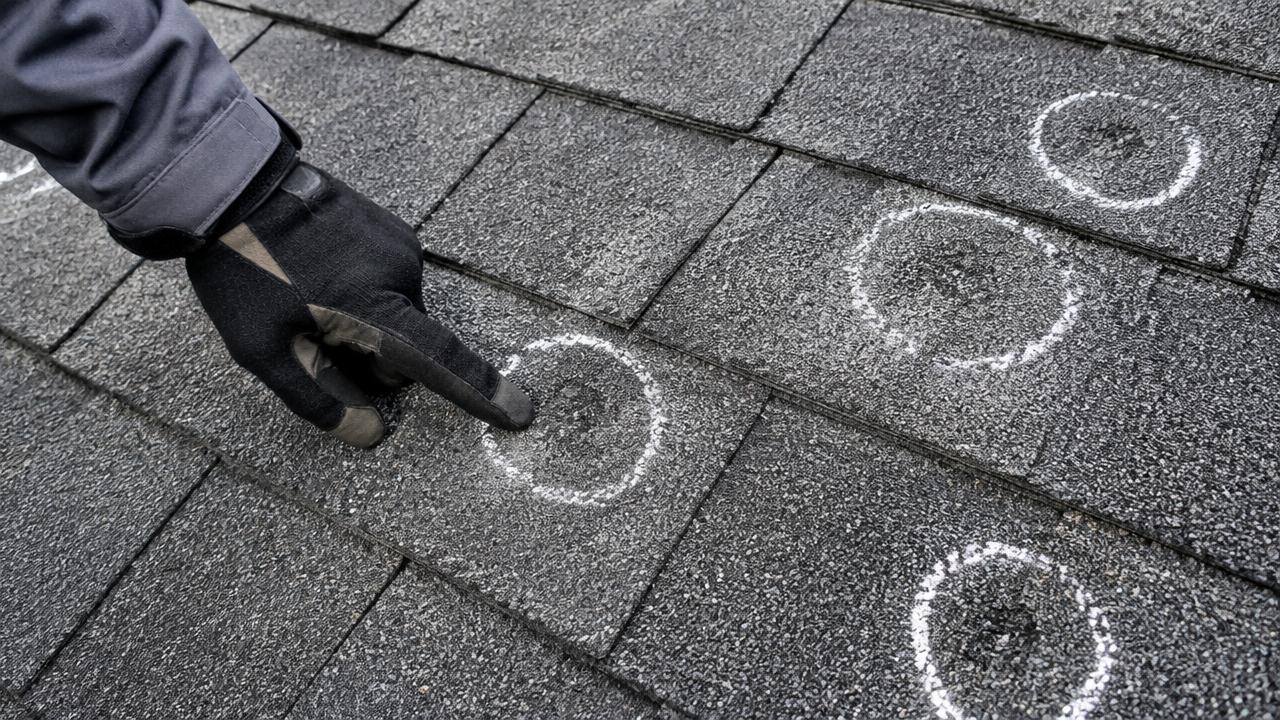
Learn how to recognize hail damage on shingles, gutters and vents, what to document, and how to work through a roof insurance claim after a hailstorm.
Signs of hail damage
From the ground or a ladder at the eaves, look for:
- Dents in gutters, downspouts, vent caps and flashing
- Dark spots or bruises on shingles where granules were knocked off
- Heavy granule build-up in gutters after the storm
- Cracked or split shingles and damaged skylight frames
- Dings on siding, window screens and outdoor AC units
Related service:Storm damage roof repair →
Document before you repair
Photograph damage from several angles with something for scale, note the date of the storm, and keep any weather alerts. Make only temporary repairs to prevent further damage until your insurer has reviewed the claim.
Working through the claim
A typical process looks like this:
- Review your policy for deductibles and filing deadlines.
- Get a roof inspection to identify and record the damage.
- File the claim and schedule the insurance adjuster's visit.
- Ask your contractor to be present during the adjuster inspection if possible.
- Review the settlement and compare it with your contractor's scope of work.
Related service:Roof inspection →Storm damage restoration →
Watch out for storm chasers
After big storms, out-of-area crews may go door to door. Verify a contractor's local address, insurance and licensing, and never sign over insurance benefits or pay in full before work begins.
Related service:Roofing consultation services →
Frequently asked questions
Emergency roof leak?
What to do while you wait for a roofer
- Stay off the roof, especially in wind, rain, ice, or darkness.
- Move furniture, electronics, and valuables away from the drip.
- Catch water with buckets and towels; a small hole in a bulging ceiling can relieve trapped water.
- Turn off power to any area where water reaches lights, outlets, or fixtures.
- Photograph the damage inside and out (from the ground) for insurance records.
- Call to ask about connecting with an independent contractor for tarping and repair.
Contractor availability and response times vary by location.
This article is general information, not professional advice. Conditions, codes and requirements vary by location — always confirm details with a licensed, insured contractor in your area.