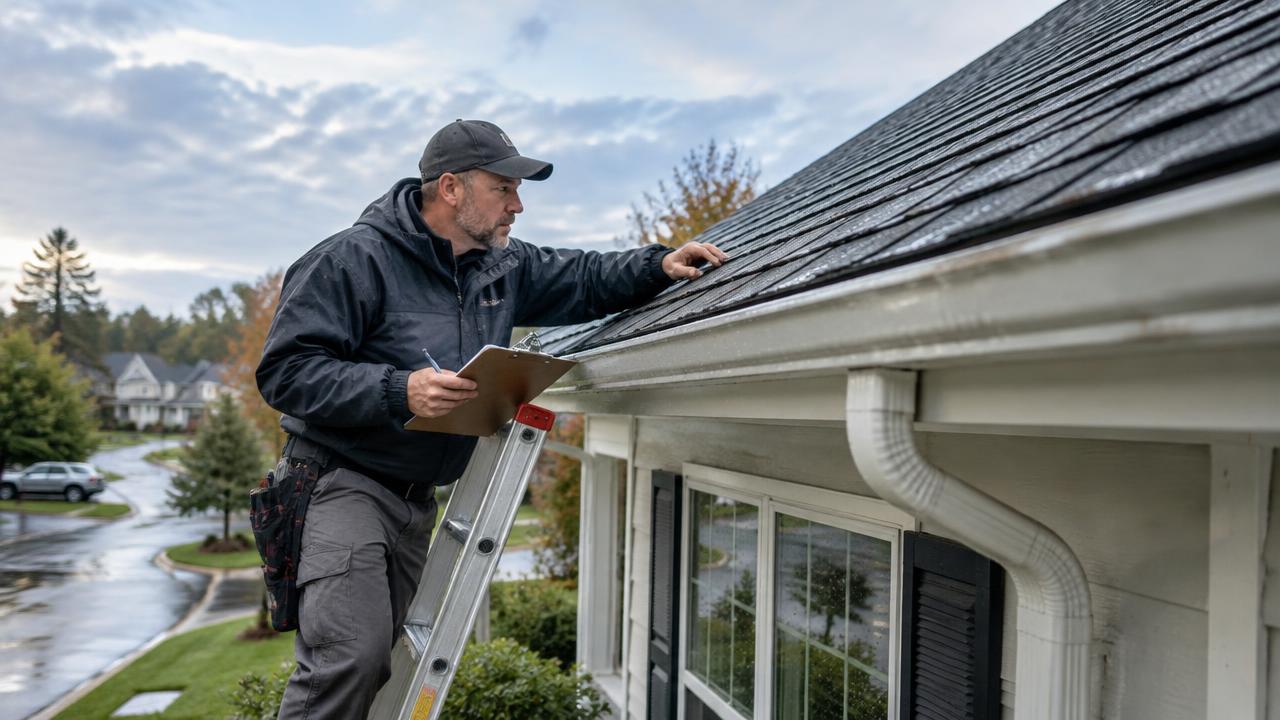
A practical post-storm roof inspection checklist: what to check from the ground, in the attic and around gutters, vents and flashing — and when to call a roofer.
Wind, hail and heavy rain can damage a roof in ways that aren't obvious right away. A small lifted shingle or cracked flashing can turn into a leak weeks later. Use this checklist after any major storm to spot problems early and decide whether you need a professional inspection.
Before you start: stay safe
Wait until the storm has fully passed and it's daylight. Stay away from downed power lines, and don't walk on a wet, steep or visibly damaged roof — most of this checklist can be done from the ground, a ladder at the eaves, or inside the attic.
1. Check the roof from the ground
Walk around the whole house, using binoculars if you have them. Look for:
- Missing, torn, curled or lifted shingles
- Exposed underlayment or bare decking
- Shingle pieces, granules or debris on the ground
- Sagging areas or a ridge line that no longer looks straight
- Fallen branches resting on the roof
Related service:Storm damage roof repair →
2. Inspect gutters, downspouts and soft metals
Metal parts often show storm damage more clearly than shingles:
- Dents in gutters, downspouts, vent caps and drip edge (a common sign of hail)
- Heavy granule build-up in gutters or at downspout outlets
- Gutters pulled away from the fascia or clogged with debris
- Damaged soffit or fascia boards
Related service:Soffit and fascia installation →
3. Look at flashing, vents and skylights
Most leaks start where the roof is interrupted. Check around chimneys, plumbing vents, roof vents and skylights for bent or lifted flashing, cracked sealant, and broken skylight glass or frames.
Related service:Skylight repair →Roof ventilation solutions →
4. Check the attic and ceilings
If it's safe to enter, the attic shows what the outside can't:
- Daylight coming through the roof boards
- Wet or matted insulation
- Water stains, drips or dark spots on rafters and decking
- A musty smell that may point to trapped moisture
- New stains or bubbling paint on ceilings and upper walls
Related service:Insulation services →
5. Document everything
Take dated photos and videos of every issue, inside and out, before you clean up. Note the storm date and keep receipts for any emergency supplies or tarping. This record is useful for your insurer and for the roofer who does the repair.
When to call a roofing professional
Get a professional roof inspection if you notice any of the following:
- An active leak or water inside the home
- Missing shingles or exposed decking
- Dents or granule loss suggesting hail impact
- Damaged flashing around chimneys, vents or skylights
- Your roof is older and you're unsure how it held up
Related service:Roof inspection →Emergency roofing services →Roof repair →
Frequently asked questions
Emergency roof leak?
What to do while you wait for a roofer
- Stay off the roof, especially in wind, rain, ice, or darkness.
- Move furniture, electronics, and valuables away from the drip.
- Catch water with buckets and towels; a small hole in a bulging ceiling can relieve trapped water.
- Turn off power to any area where water reaches lights, outlets, or fixtures.
- Photograph the damage inside and out (from the ground) for insurance records.
- Call to ask about connecting with an independent contractor for tarping and repair.
Contractor availability and response times vary by location.
This article is general information, not professional advice. Conditions, codes and requirements vary by location — always confirm details with a licensed, insured contractor in your area.